‘I felt my parents just didn’t understand. They didn’t see what I saw. Not many people understand what you want to do and what you see; what your vision is. It held me back and it made me feel really insecure about myself at the time. I just had to keep going…and I have to keep going.

‘After school, I didn’t know what I wanted to do. I was kind of lost so I just kept on with my dancing. It made my parents angry but it’s a hard road trying to be a dancer. I have a troubled relationship with my parents and don’t live at home so the Ted Noffs Foundation Street University helped me to work on my art.

‘As long as you persevere, have faith and the right support then you will get there. You will show people that this is what you were meant to do.

‘Parents just need to support their kids – that’s what they need. It’s going to be a hard road for both sides but continue to support and see where that gets them. It will take them far.

‘For young creative people, be confident. Post your work online. Tell people about what you do. Show people. Don’t hide it. Don’t keep it to yourself. Go and open up your work for the world to see. There will be someone who is interested.’
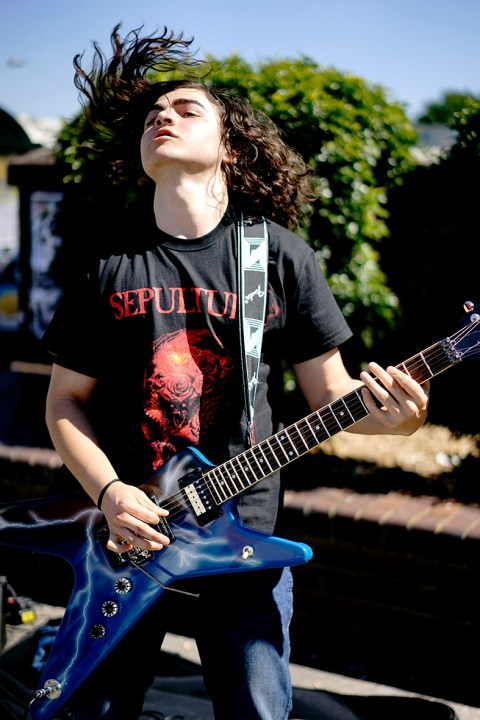
Eliam formed The Pioneers dance group who will perform and model at this Thursday’s Fashion Parade at Noffs Shop Newtown launch from 6-8pm – 461 King Street.
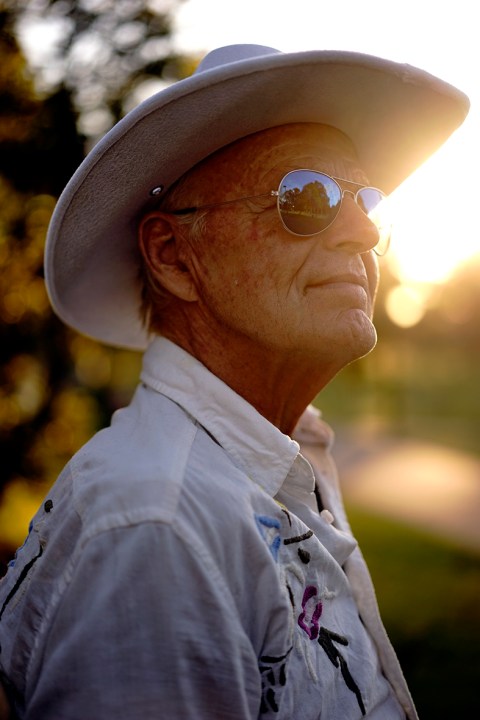
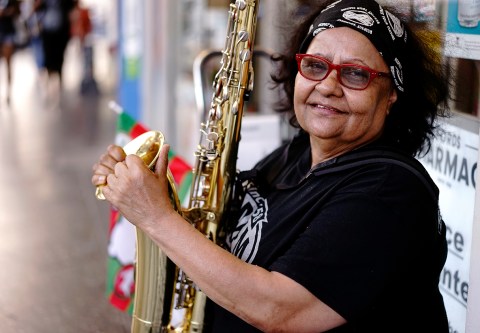
‘Salvador Dali said something interesting. He said, “The only difference between me and a mad man is that I’m not mad”. Agreed he used a term that is now offensive to people but his point is well taken that you can be as eccentric as hell; really eccentric to the point that colleagues and friends call you weird, right? But that’s not mental illness.’

Would you consider yourself eccentric?

‘Oh, hell yes! I cultivate it. I do it deliberately.’

Why is that?

‘People remember.’


‘I’ve been a homeless alcoholic on the streets. I’ve been an addict walking the streets when I was 16 years old up at the Cross and there were no real outlets to get help then. I think one of the strong contributing factors of depression is when you isolate yourself. You can’t isolate when you feel bad. Just pick up the phone; it’s not a backbreaking thing to do. We have the technology now – mobile phones; the internet. There are support programs anywhere and everywhere. There are phone numbers advertised on TV. You know, Beyond Blue and all that.

‘When I was younger, there was nothing you know. I just got barely through by the skin of my teeth; I really did. It was really hard dealing with depression then. There are better support avenues out there now. You need to talk to someone. Even if you’ve got one friend, one is better than none – there is always someone around.

‘Busking is like my best anti-depressant. It fills that void. It’s a guarantee that every single time I go busking, I go home feeling on top of the world. It’s always 100% guaranteed.’

Supporting Mental Health Week 5-12 October.

Seek help at Beyond Blue.

‘I’m a Professor of Geography at Sydney University and a Newtown resident since 1989. I’m doing a lot of work on global food security issues, nutrition, links with climate change and the environment.’

What kind of trends are you seeing at the moment?

‘My sense is that there are a lot of problems. It’s a pretty grim future. There are problems regardless of climate change in terms of feeding upwards of 9 billion people by the year 2050. And the environment is becoming more degraded and we’ve got a more uncertain climate. These are big issues that there are no easy answers for.’

From a local perspective, what can individuals do?

‘There is a lot of good stuff that’s happening. I think part of the answer is to be more resilient which means a bit more local food – supporting local businesses. I think the old model of big companies shipping food around the world is becoming less reliable in the future. I think we have to rely on more local production. The Inner West is a great place for local start-up businesses in the food and beverage industry. Some restaurants do local sourcing. There are of course urban gardens, community gardens, backyard gardens – a lot of things happening around this place. If it can happen in the Inner West, it can happen anywhere!’

‘I used to be a high school teacher in maths and geography. 30 odd years ago I went to England and I was teaching over there for a long time – long enough to get married, have a daughter, get divorced. You know…the usual story. When I came back they’ve changed the rules on me. I’m no longer qualified. They consider me a new starter. I haven’t got a specialist teaching qualification so despite the fact that I’ve got 30 years’ experience including head of department I can’t teach without going back to uni for another year. I can’t afford that so I’m making scarves to keep myself above the streets rather than below them.’

‘If I sell a few scarves a week, I’m happy. The first couple of scarves buys all the wool I need. The next one buys me food for the week and the next one puts some petrol in my home.’

‘The micro-brewery industry is flourishing across Australia and we’re going to see a lot more of it but I put the caveat on that in terms of research. We are dependent on these high quality grains and hops that are suitable. Unless we have a strategy that supports agriculture to grow the crops and not have to import both the grain and the hops, then we don’t have an industry. I see it as a flourishing industry but it needs support at a bigger picture level than it’s getting at the moment.’

There are a number of microbreweries in the Inner West, what would be your message to them?

‘Keep going – it’s fabulous! Keep making more beer!’

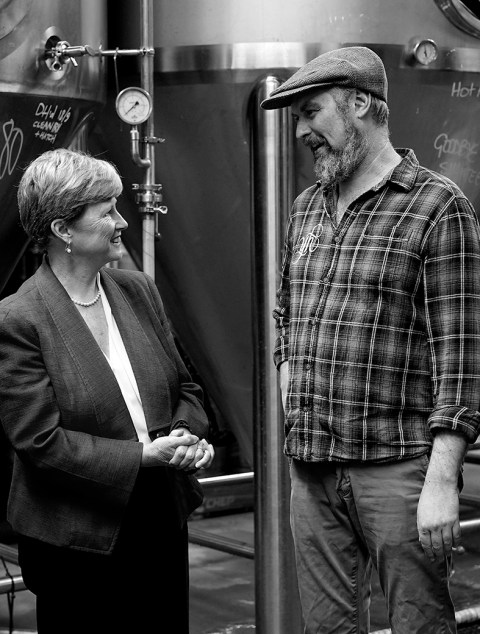
Greens Leader & Craft Beer Industry Association No. 1 Beer Enthusiast, Christine Milne

What’s been your biggest challenge in life?

‘Doing my first degree when I was 38 which I loved and sailed through and I got a first. I studied Drama.’

What advice would you give to your 20 year old self?

‘Aim for RADA (Royal Academy of Dramatic Arts in London) – do the degree early! That is where I wanted to go but my parents wouldn’t let me. I became a registered nurse when I was 18 instead.

‘I’ve only stopped performing on stage in the last five years because I’ve had a lot of problems with my teeth and I won’t go on stage with no teeth. I can’t annunciate properly but I’ll have new teeth in soon.’

Will you go back to stage then?

‘Only to do cabaret – I love cabaret. I didn’t find cabaret until I was actually doing my finals project. I love singing and dancing. I shall return!’

‘The first practice we did without Jay was really difficult. We weren’t expecting that – just his non-presence there was tough.

‘Pat my brother was in town from Tasmania for the funeral. Pat will be filling in for Jay at this Saturday’s Smallworld Festival. We wanted to introduce Pat to the songs and that gave him two weeks to rehearse them and try to get them as close to the way that Jay used to play them.

‘It was the day after the funeral. We were all a bit exhausted. We’d all had the night out the night before at the pub that Jay used to drink at. We thought we’d jumped over this big hurdle in getting through the funeral and then all of a sudden, we had to go through a band practice without him being there.

‘This will be our first gig since his passing. If the gigs hadn’t been booked we probably wouldn’t have played for an extended period. It was Jay’s funeral we wanted to pay for.

‘We’ve also got a couple of gigs booked in Melbourne and my other brother will fill in on one of those plus another bass player who Jay taught how to play bass and he’s very close to us.

‘We’re not getting a replacement bass player. He’s not being replaced. People who are close to him are filling his shoes in remembrance. Once all these shows are done we’re going to take a long time off and who knows? For the time being I don’t even want to think about it.

‘On Saturday we are chucking in Acid Rain in the set because that was a song that Jay wrote. Just us being there and doing the gig is a tribute to Jay in itself. Same with the audience – he’s still fresh in everyone’s mind.

‘Every now and then you realise he’s not there. It comes in waves. Sometimes when you least expect it.’

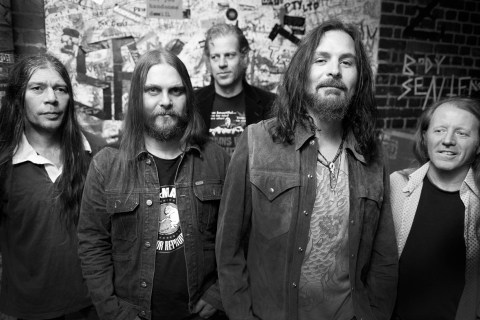
Tumbleweed’s Lenny Curley about his brother Jay who passed away suddenly last month.

Tickets to Smallworld Festival are on sale at http://www.younghenrys.com/smallworld/.

Limited edition t-shirts to fundraise for Jay’s three year old son, Max, will be available for purchase on the day for $25.

What’s the best thing you’ve learnt about yourself while you’ve been studying psychology?

‘I’m not that different to everyone else. When I was young I had traumatic experiences. I have a complex traumatic disorder and so for a long time I was such a depressed person. I’d get anxious and feel like I was so weird and so different and didn’t fit in.

‘But just about everyone has their own issues and problems. It’s just about how those problems combine together and that means that some people are depressed and some people are just sad sometimes.

‘I think everyone’s a little socially anxious. I’m probably more socially anxious than a lot of people I know. In the same way I would reserve judgement when meeting someone else, I try to reserve judgement about their judgement. I try to assume they’re not judging.’