‘The saddest moment in my life was when I went to Long Bay Jail. I spent 2½ years in there. I robbed a 7-Eleven in Matraville. I was an alcoholic and a drug addict.’

What did it teach you?

‘Gratitude. Loss of freedom. It taught me to be humble. It taught me to respect others – that you can’t take other people’s money or belongings. I’ve turned all that around in my life. I now go down to Mathew Talbot every Tuesday and feed the homeless. I give back; try and make up. I haven’t been back to prison since 1999. I intend not to go back. I’ve got 3 businesses and I went to acting school.

‘It’s hard when you’re in prison because you’re judged by the police first and you’re judged by the judge and jury. Then you’re judged by Corrective Services and then you get out of prison and you’re judged by society.’

What was the hardest thing when you came out of jail?

‘Getting accepted again by society – them not knowing that I’d changed. There are some people in society that want help; that want rehabilitation. I’ve learned my greatest lessons from my biggest mistakes.’

‘I last saw my brother at Manchester airport 20 years ago when I was 7 years old. He was leaving for Australia. I clearly remember giving him a hug and saying goodbye and that we’d see each other again.

‘We communicated by hand written letters over the years. All his letters were always so loving and positive. Whenever he used to phone at Xmas and would say goodbye to me, he could barely talk he was so upset. I really remember not understanding why he was so sad. I think it became easier over the years not to make that call and just to cut himself off a bit.

‘He didn’t phone at Xmas in 2003 and we got a bit worried. He’d been travelling around Australia and promised he’d be better at keeping in touch. He was always at this one address at Stanmore so we always knew we could get hold of him there.

‘Shortly after that, I got the last letter I’ve ever had from him. It was really sweet. He said never to worry about him and he’s very happy. I carried on writing after that but we didn’t hear anything for a while.

‘In 2009, I got every single letter I sent him to Stanmore sent back to me unopened, altogether in a big package.

‘I came out last year for 2 months to look for him. I’ve contacted the Salvation Army, Missing Persons Register, Red Cross. I went to the electoral roll and visited every Martin Roberts in Sydney. I wrote to every single Martin Roberts across Australia. I’ve checked the death register. Nothing. Immigration says he hasn’t moved on so I know he’s here.

‘I’ve given up my life, my job, my partner, everything to come out here again to look for him. Police have confirmed there is a Martin David Roberts with his date of birth listed to an address in Newtown. That’s the best news ever because it means he’s still alive because there is a part of you that starts thinking something awful happened to him.

‘He was seen 4 months ago at Newtown station and around 9 months ago at Town Hall station and apparently he’s a bit of a regular in pokie rooms around Newtown.

‘I don’t want to judge him for anything he’s been through. I don’t need a justification or a reason. None of us do. I just want to tell him that I love him and that he’s loved and missed.’

PLEASE SHARE TO HELP FIND MARTIN. IF YOU KNOW OF HIS WHEREABOUTS, PLEASE CONTACT NEWTOWN POLICE OR HIS SISTER VIA http://www.facebook.com/helpfindmartin

‘Families come in all shapes and sizes. Gay-parented families are just one type of family. We should celebrate families for who they are – a group of people that love one another and care for one another and are sometimes raising children together and sometimes not raising children together. For me that’s actually the thing that government should be trying to support and enable is that loving connection that gives people health and wellbeing and a sense of belonging and not trying to make judgements about what type of family is best or isn’t best. I think that all families are doing their best and none of us are perfect.

‘Some of the most powerful advocates of marriage equality are parents of gay men, lesbians and transgender people. They’re incredible advocates when they say they don’t want anything except for their son or daughter to be treated like everyone else. Every story helps with the realisation that this is a very normal thing and the world isn’t going to collapse. All that’s going to happen is that people that love each other can get married and just get on with it.’


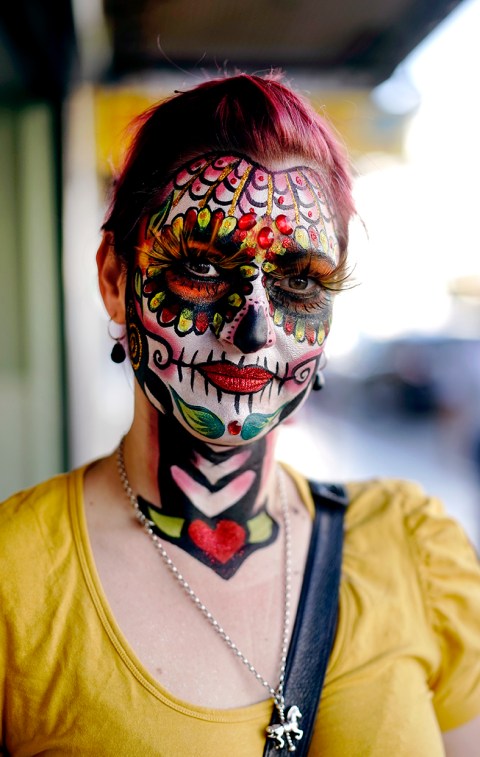
‘They always thought I was a freak – that I wasn’t normal. I just wasn’t the average Joe as they say. It pretty much lowered my self-esteem and I thought I can’t dress this way or be this way and I have to look the same.

‘I used to live in a country town but now that I’ve moved here I have the chance to be myself instead of hiding away. It’s like I’m free now.

‘You can’t let other people’s expectations get you down. Just follow your heart and what you really want in life. If you want to be yourself then why not do it? Nothing is standing in your way. It’s only yourself that’s stopping you.’

‘I felt my parents just didn’t understand. They didn’t see what I saw. Not many people understand what you want to do and what you see; what your vision is. It held me back and it made me feel really insecure about myself at the time. I just had to keep going…and I have to keep going.

‘After school, I didn’t know what I wanted to do. I was kind of lost so I just kept on with my dancing. It made my parents angry but it’s a hard road trying to be a dancer. I have a troubled relationship with my parents and don’t live at home so the Ted Noffs Foundation Street University helped me to work on my art.

‘As long as you persevere, have faith and the right support then you will get there. You will show people that this is what you were meant to do.

‘Parents just need to support their kids – that’s what they need. It’s going to be a hard road for both sides but continue to support and see where that gets them. It will take them far.

‘For young creative people, be confident. Post your work online. Tell people about what you do. Show people. Don’t hide it. Don’t keep it to yourself. Go and open up your work for the world to see. There will be someone who is interested.’
Eliam formed The Pioneers dance group who will perform and model at this Thursday’s Fashion Parade at Noffs Shop Newtown launch from 6-8pm – 461 King Street.

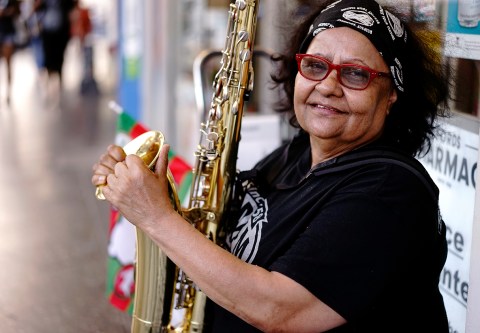
‘I’ve been a homeless alcoholic on the streets. I’ve been an addict walking the streets when I was 16 years old up at the Cross and there were no real outlets to get help then. I think one of the strong contributing factors of depression is when you isolate yourself. You can’t isolate when you feel bad. Just pick up the phone; it’s not a backbreaking thing to do. We have the technology now – mobile phones; the internet. There are support programs anywhere and everywhere. There are phone numbers advertised on TV. You know, Beyond Blue and all that.

‘When I was younger, there was nothing you know. I just got barely through by the skin of my teeth; I really did. It was really hard dealing with depression then. There are better support avenues out there now. You need to talk to someone. Even if you’ve got one friend, one is better than none – there is always someone around.

‘Busking is like my best anti-depressant. It fills that void. It’s a guarantee that every single time I go busking, I go home feeling on top of the world. It’s always 100% guaranteed.’

Supporting Mental Health Week 5-12 October.

Seek help at Beyond Blue.