
Love is love.

Love is love.
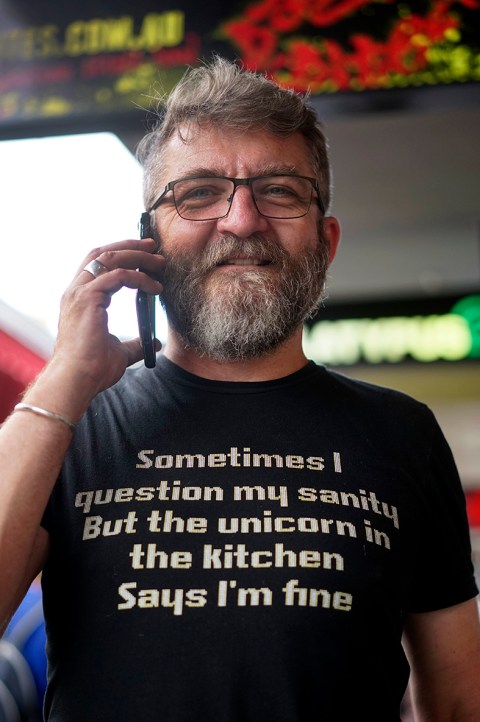
Kudos, unicorn.
Spotted in Newtown.
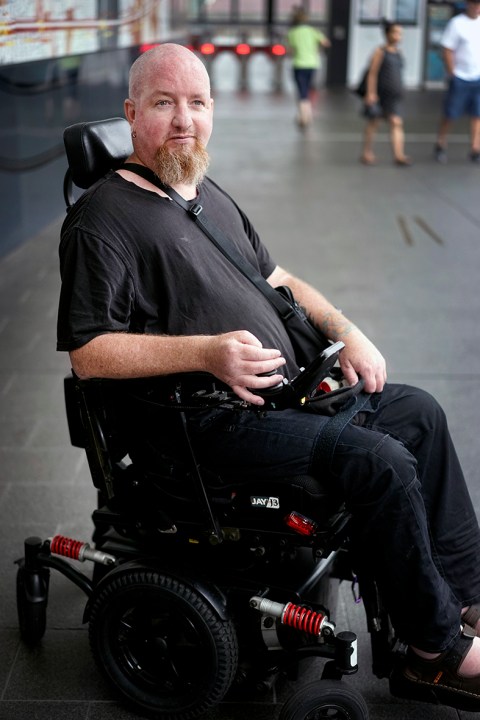
‘I don’t have a lot of use of my left arm. I used to be able to paint and draw with either arm; now I just paint with my right arm and rest it on my wheelchair. I’ve had to buy an electric easel that can go up and down that can compensate for the limited range of movement in my right arm. I’m in a wheelchair that also raises and lowers itself.
‘With my paintings I wanted to explore the theme of the loss of identity that comes with disability. I was a really physically active person. I rode motorbikes, I sailed and played sport. As I’ve become disabled, the things that I loved doing, that made up who I was, have fractured off and splintered away from my life and I can’t do those anymore. In their place are all these other things like the day to day chores of disability, of dealing with bureaucracy and this whole myriad of things that make up disability. I’ve represented that with figures in the paintings that are fractured and disintegrating and that are in vulnerable and contemplative positions. I’ve tried to capture the essence of living with a disability.
‘For me, I have to spend a lot of time, in a meditative kind of state keeping it together and putting things in perspective – taking the things that upset you and stress you out and think them through until their relevance dissipates. That’s what some of the paintings and some of the figures are about. Some of it’s about having fun painting and enjoying paint and colour.
‘With disability, you lose parts of yourself. I really miss being able to drive a car, work on cars and ride motorbikes and all of that. If you don’t actively replace those things with something constructive, it all gets taken over simply with disability and stuff. Art has become the thing that fills that void and the thing that replaces all those fractured pieces. I think it’s the art that holds me together a bit – sort of like the glue at the end of the day.’

‘My diagnosis at 27 changed my life dramatically. I connect all these things back to what I bundle up as “below-par”. I’d do weights and not bulk up. I couldn’t run as fast as other people. Knowing you are somehow physically different to others, made me feel really inferior and insecure.
‘I looked for various ways socially to compensate for that. It led me toward a lot of really negative lifestyle choices as far as being reckless. Getting diagnosed was a huge relief – it turned all that around.
‘I have a degenerative neuro-muscular condition called Inclusion Body Myositis which means my muscle cells don’t regenerate. Effectively I’ve got a slow, degenerative, muscle-wasting disease. It started off in my legs and it progressed to my arms. It’s slowly going through every set of muscles throughout my body.
‘I’ve had to face so many physical and emotional challenges. It’s made me a lot tougher and a lot stronger as a person. It’s made me a much nicer person than I used to be in my 20s. I’m nowhere near as selfish; I have a different perspective on life. I know what’s important and what’s not. I think I do. It just put me on a different path.
‘Before I was diagnosed, I was working in hospitality. I’ve always done really physical kind of work but I really physically started to struggle with all of that. Then I decided that I wanted to study and did an Advanced Diploma of Fine Art at TAFE followed by a Bachelor of Fine Art at the University of NSW.
‘I was fortunate enough at the start of 2016 to be awarded a grant through Accessible Arts which is designed to support me as an emerging artist in a sustainable arts practice. It’s helped me buy art supplies and an electric easel. It’s helped me build a website and employ a videographer to do a short 3.5 minute documentary about me and my practice. It all culminates in a solo exhibition where I produce 20 paintings. It’s designed to sell some work and generate some income so that I can then be funded to have a sustainable art practice for another year and have another show.’
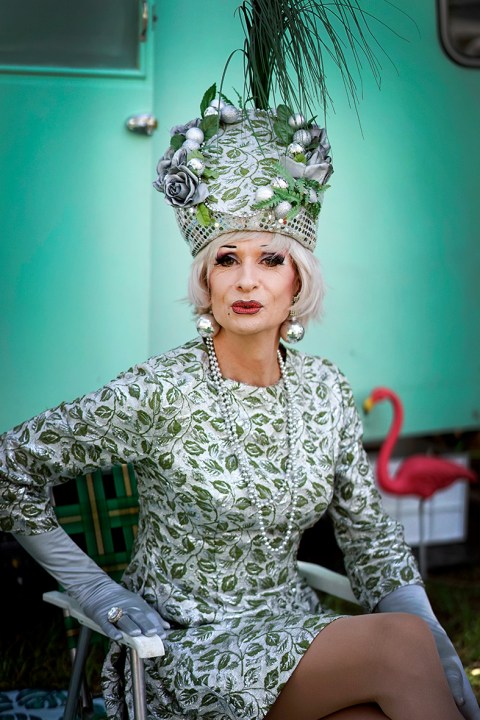
Happy Fair Day, Humans of Newtown!
Sydney Gay and Lesbian Mardi Gras Fair Day

‘My dad had a big heart attack. I was 13 and I had to drive him to town in the car. I’d never driven the car before but I’d played with the pedals and the gears while it was in the shed. After the heart attack he couldn’t drive anymore and I had to drive my mum around. It was war time and a lot of kids had to do a lot of things they’d never done before. I used to have to take mum to the town so she could see dad in the hospital. I lived in a small town of only a few hundred people so I drove under the supervision of the town policeman until I was old enough to get a licence.’
This story and image featured as part of a series highlighting the housing affordability crisis in Sydney. Although he had six children, he lives alone in a converted garage (the room was not much bigger than his bed) in an old terrace house in the Inner West.

‘I’d broken up with my fiancée and suddenly realised I was by myself. It was just me and I thought, well, I don’t need much. At the same time I was also dealing with stress anxiety from working a lot and the lifestyle that comes with that. Even though nobody was pressuring me in the slightest, I felt that way. I felt that you’ve got to live a certain way to make your parents proud and your friends happy.
‘I studied a bit of art when I was a teenager and had left it for about 20 years. When I started it again about two years ago, I found it very meditative and felt very stress free. I realised how much I missed it and that this is my real love.
‘I left all my jobs. One of the biggest challenges of doing that was the fear of whether I would be good enough as an artist because you honestly don’t know. It’s not always about skill level in art either – it’s about finding your own voice and your own style and telling a story through it.
‘At my age, it’s hard to get back in to paid employment – trying to apply for a job when you’ve left it for two years – they’ll take someone who’s currently working in the field and a younger person as well. There was always that risk. If I had kids and a mortgage I wouldn’t do it because you do it for your kids – you work. I can be a little bit selfish because it’s just me. I can’t go out every night with friends and go to fancy restaurants but I get to do what I love every day.’

‘I was born in Tanzania but Newtown was where I landed with my family when I was 8. It was our first encounter of Sydney and shaped our idea of Australia being this multicultural society and had a very positive impact. Newtown is a bubble but it shows that we have capacity to be that way as a whole. I feel like it reflects our best side and what we could be on a wider scale.
‘I came from a country where you just see one face so to speak which was my brownness. That didn’t really mean anything until I came here. When I came here I was different but there were just so many other differences that it was cool to be different. Newtown is a melting pot of cultures and demographics where we celebrate uniqueness and just being who you are.
‘I really believe in following my intuition and to follow what lights up my heart in whatever I do.
‘Follow your joy – go where you glow; go where you grow.’
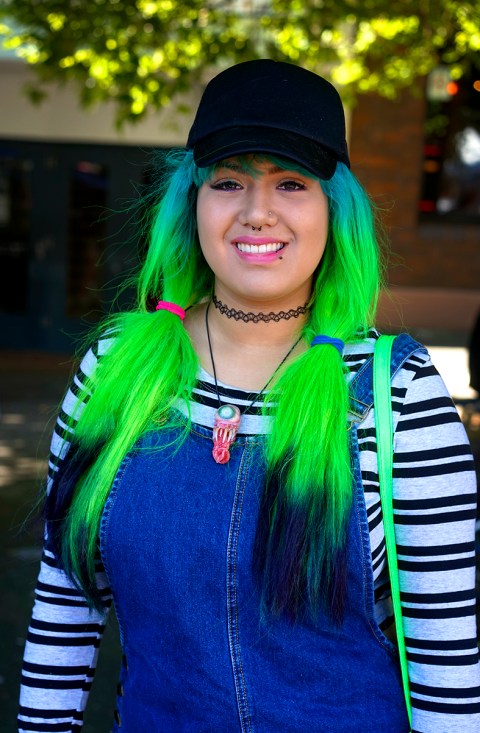
‘One of my biggest challenges in life is just dealing with people. With some people it depends on how they’re day is going as to how they approach you as a person.
‘The way I was brought up though means that I just don’t really care about it. You don’t need everyone you meet. There are so many people in the world that if someone puts you down there are other people that can bring you up.’
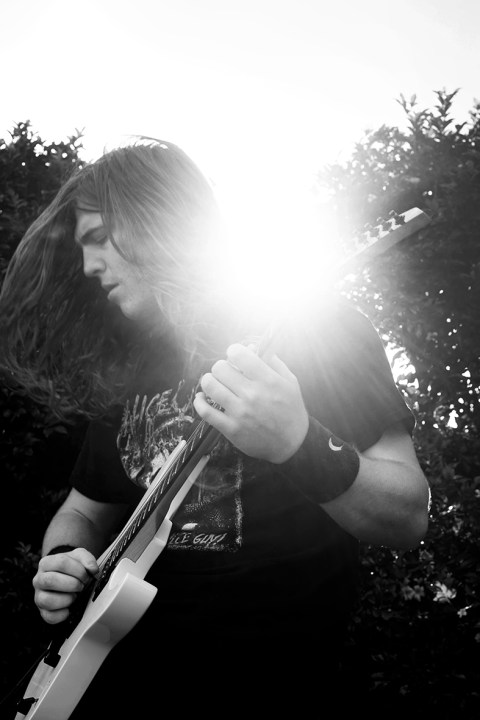
Step aside Metal Kid. There’s a new contender on the block.
Spotted in Newtown.
 Humans of Newtown